Why Every Decision Still Comes Back to You

Every decision still comes back to you. Every single one. Your phone buzzes again, and it's someone needing a yes on something small.
Picture this. It's Thursday, you're already behind, and someone pings you to approve which font goes on a flyer. That's not a business problem. That's you, again.
I get it. You didn't build this business to spend your week making calls that don't even need you. This isn't a discipline problem. Your team learned this pattern from you, one small approval at a time.
Key Takeaways
Every decision comes back to you because your business never defined who owns what.
Your team asks you first because asking is faster than owning the outcome.
The fix isn't working harder. It's building clear decision rights.
Pick one recurring decision. Hand it off this week.
What Is a Decision Bottleneck?
A decision bottleneck happens when one person, usually the owner, has to sign off before almost anything moves. Small calls and big calls both stop at the same desk.
It's not about being controlling. It's about a business that never wrote down who's allowed to decide what. So everyone defaults to the safest option. Ask the owner.
Why Decision Bottlenecks Matter for Growing Businesses
Here's the thing nobody says out loud. You just answered a text about a flyer font while standing in line for milk. That's not leadership. That's a business with no owner but you.
It's not because your team is lazy. It's not because they lack initiative.
It's because your business never named who owns what. So the safest move is always the same. Ask the owner. Ask you.
A recent Forbes Coaches Council piece put it plainly. Teams keep bringing decisions back to the founder because the founder never built a system that catches them first.
That system doesn't have to be complicated. It just has to answer one question. "Who decides this, if I'm not in the room?"
If nobody can answer that fast, you already found your problem. And honestly, most owners never even asked the question. As you grow, that gap gets more expensive, not less, because more people are waiting on the same desk.
Why Decision Bottlenecks Happen
Here's the part most owners get wrong. You think if you just had more hours, this would sort itself out. It won't.
Your team isn't waiting on you because they need your brain. They're waiting because nobody ever told them they're allowed to decide without you.
I made this exact mistake for years. I'd see a bottleneck and buy a tool to fix it, instead of just handing someone the actual call. If you're stuck in the same loop I was, being too dependent on your own approval is worth a hard look, because this font-choice thing is just the tip of it.
Think about it like a beehive for a second. Mike Michalowicz built a whole idea around this in his book Clockwork, a system for organizing your business around the one role that matters most, the way a hive protects the queen so she can do her one job. She doesn't gather pollen. She doesn't build honeycomb.
Most owners do the opposite. You're doing the queen's job and the worker bees' jobs. No wonder every decision funnels back to your desk.
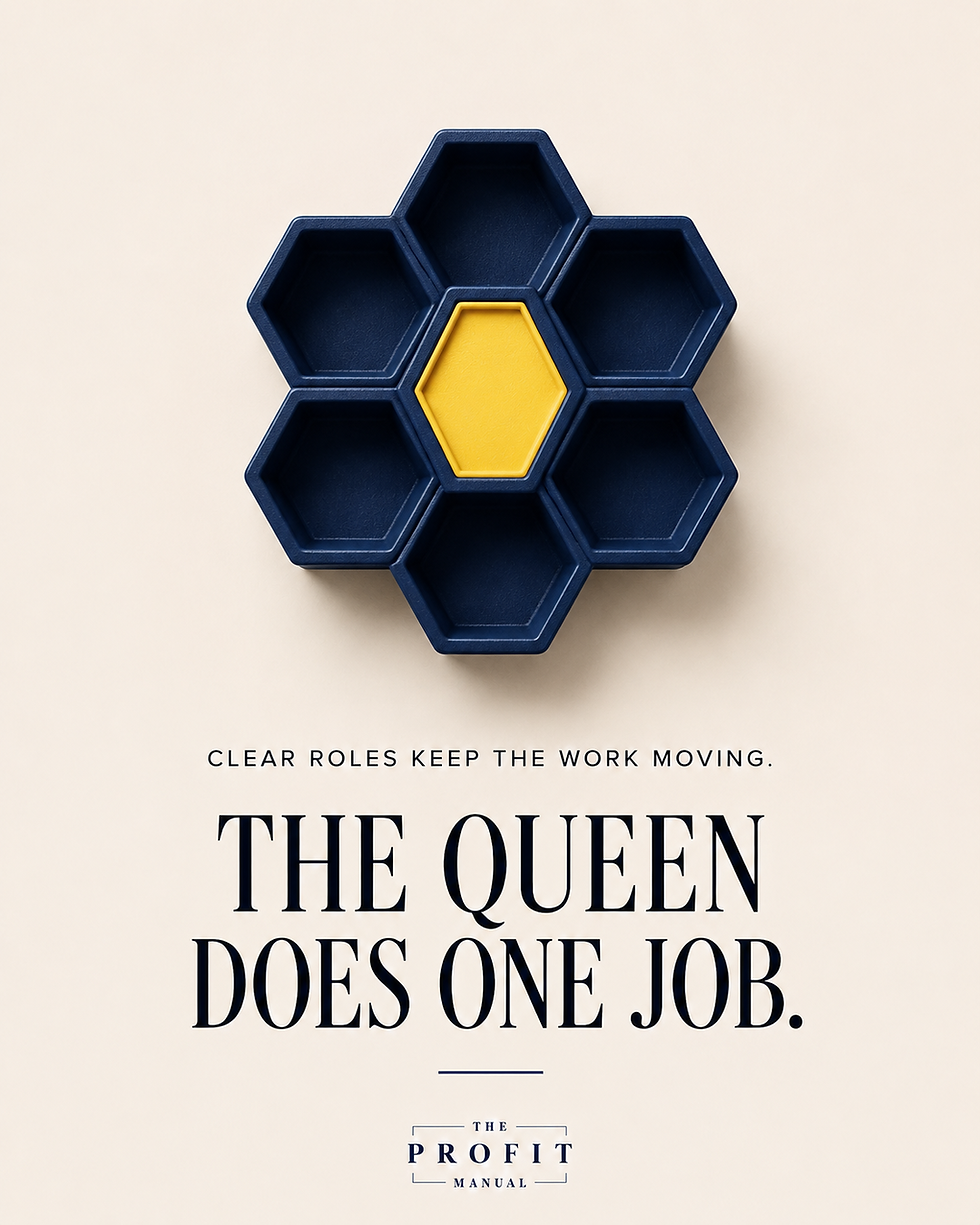
Michalowicz also uses an emergency room example that stuck with me. In a good ER, everyone works to keep the doctor free for patients. In a bad one, the doctor drowns in paperwork. Your business runs the same way.
The Cost of Buying Tools Instead of Naming Owners
Here's my honesty moment, since we're being real with each other. I've spent thousands on software I barely opened.
Every time, the reason was the same. I bought a tool instead of assigning an owner.
Tools don't make decisions. People do. If nobody owns the decision, the tool just becomes one more tab you check from the grocery store line.
Michael Gerber wrote about this in The E-Myth, a business book about how most owners are skilled technicians who never build a business that can run without their own hands doing the work. I read it and felt personally attacked, honestly.
I made that mistake for years. What actually fixed it wasn't a new app. It was naming one person and saying, "This is yours now."
What to Look for Before You Hand Off a Decision
You've run payroll. You've hired people. You've had to let people go. Naming a decision owner is not harder than any of that.
Before you hand one off, check three things: does this decision repeat weekly or more, is there a person who already touches this work, and would a wrong call here cost you a day, not a client. If yes to those, it's ready to leave your desk.
Handing off a decision feels risky at first. What if they get it wrong? They might. So did you, plenty of times. You either win or learn. You never lose.
The real risk isn't a wrong call from your team. It's a business that can't run one day without you in it, which is exactly what we get into when we talk about what happens when you actually try to build something that runs without you.
How to Stop Being the Decision Bottleneck
Most owners think the fix is a better org chart. It's not.
Here's the reframe. The org chart tells people who reports to whom. It does not tell them who decides what.
Those are two very different problems. Most businesses only ever solve the first one, then wonder why nothing changed.
1. Sort Your Tasks With the Delegate and Elevate Grid
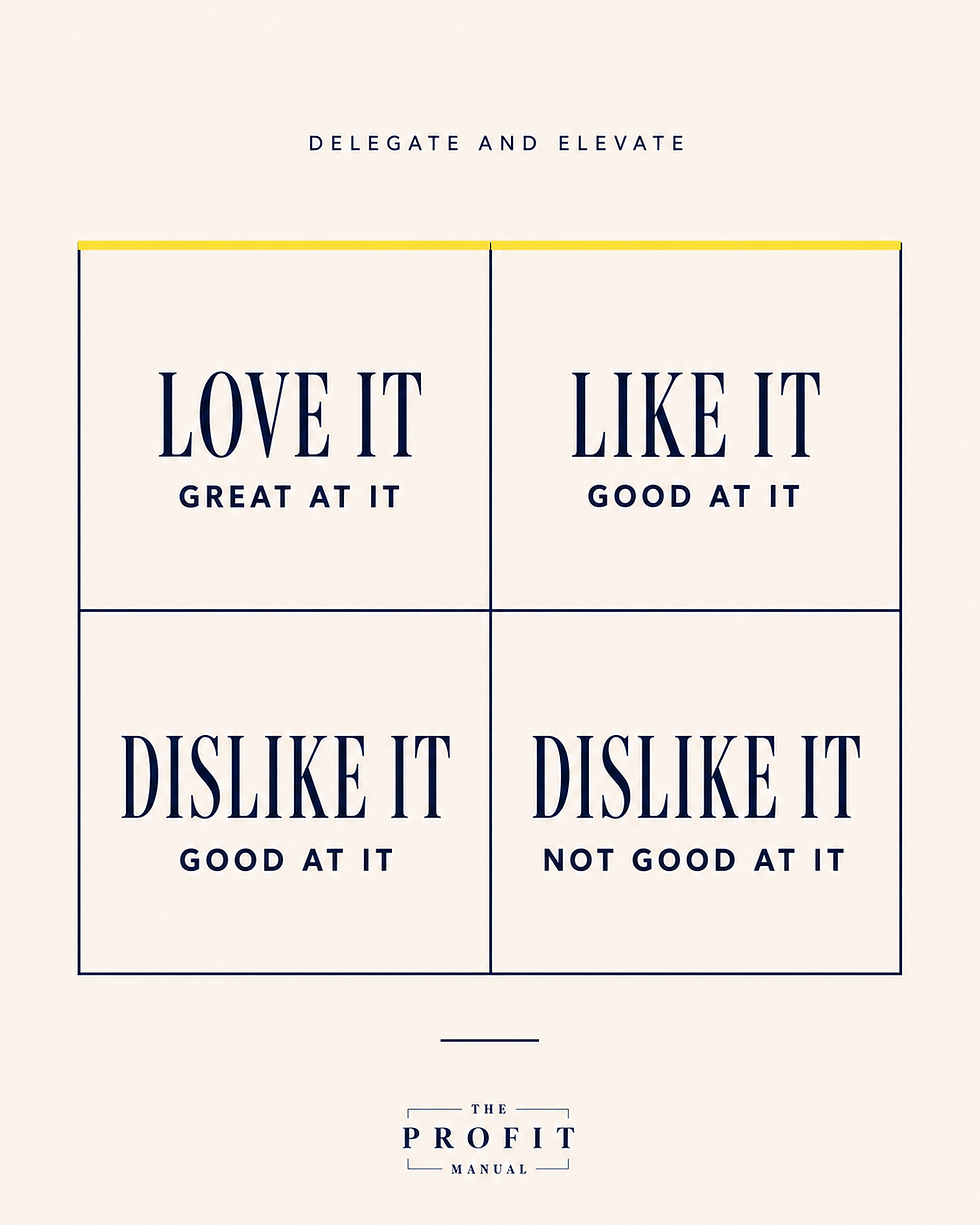
This is where EOS, a popular small-business operating system, has a tool called Delegate and Elevate, which sorts every task you do into four buckets based on whether you love it and whether you're great at it. It's simple, but it works.
Love it and you're great at it: this is your zone, spend most of your time here. Like it and you're good at it: keep some of this, it supports your top zone. Dislike it but you're good at it: this is the trap, you're skilled here so you keep doing it, hand it off anyway. Dislike it and you're not even good at it: get rid of this today, no debate needed.
The rule behind this tool is simple. At least 80 percent of your time should sit in the top two buckets. Below that, you burn out and the business slows down with you.
2. Name One Owner for One Decision, Starting Today
Pick a decision that hits your inbox every week. Maybe it's approving small expenses. Maybe it's the flyer font.
Write down one name next to it. Not a department. A person.
Tell them today: "This is your call now. Don't check with me first."
3. Do This Before You Close This Tab
Open your messages right now. Find the last decision someone brought to you that they could have made themselves.
Reply and hand it to them. Tell them why you trust them with it.
That's one decision off your plate. You're already started.
Which Decisions to Hand Off First
Start with whatever repeats the most, not whatever feels the biggest. A five-minute weekly approval you handle 50 times a year costs more than one big call you make twice.
If you run a small team, start with expense approvals and scheduling. If you run a bigger team, start with client-facing calls that currently wait on you, since those cost you the most trust when they're slow.
Common Decision-Bottleneck Mistakes to Avoid
Buying software to fix a bottleneck instead of naming an owner.
Redesigning the org chart without ever assigning decision rights.
Handing off tasks but keeping the actual authority to say yes.
Staying quiet about who owns what, so the team defaults back to you.
How to Know If Decision Ownership Is Working
You'll know it's working when the small pings stop and the questions that do reach you are the ones that actually need you. Your team starts saying "I decided" instead of "can you decide."
If a month goes by and the same person is still asking you the same recurring question, the handoff didn't stick. Name it again, out loud, and remove the option to check with you first.
The Shift That Actually Changes Your Business
The goal was never to answer faster. The goal is to be needed less for the small stuff, so you're available for the big stuff.
The business stops owning you. You start owning it.
You take a Tuesday off and nothing breaks.
That's not a fantasy. It's what happens when decisions have owners other than you.
If you want help figuring out which decision to hand off first, use the free What to Automate First tool. It ranks your work by time, cost, repeatability, and risk.
And if you're ready to install this inside your business instead of just reading about it, apply below. We only work with five companies at a time so I can stay personally involved.
Make good choices. Then build systems that carry them out.
Frequently Asked Questions About Decision Bottlenecks
How do you stop being the decision bottleneck in your business?
Start by naming a single owner for one recurring decision. Tell them clearly they don't need your approval anymore. Repeat this weekly, decision by decision, until most routine calls happen without you.
What causes owner dependency in a small business?
Owner dependency happens when a business never defines who owns which decisions. Without clear ownership, employees default to asking the founder, because that feels safer than deciding alone and risking blame.
Is it normal for every decision to come back to the owner?
It's common, especially in businesses under five million in revenue, but it's not healthy or permanent. Most owner-dependent businesses can reduce this within a few months by assigning clear decision owners and holding them to it.
Related Reading
What Can AI Do In Your Business?

Most businesses don’t need "more AI tools".
They need to know where AI will actually save them time.
What To Automate First is a free 5–10 minute business checkup. List the work you and your team do each week, and it will identify "3 places to focus first"
—including where your time and payroll may be leaking.
No guessing.
No chasing the newest AI tool.
Just a clearer place to start.


Comments